Hotel Management Software Buying Guide: 7 Questions to Ask Before You Choose
Selecting the right hotel management software can significantly impact daily operations, guest experience, and revenue. As the hotel management market evolves, hoteliers face an overwhelming number of hotel manager solutions, cloud PMS tools, and AI-powered hotel management platforms.
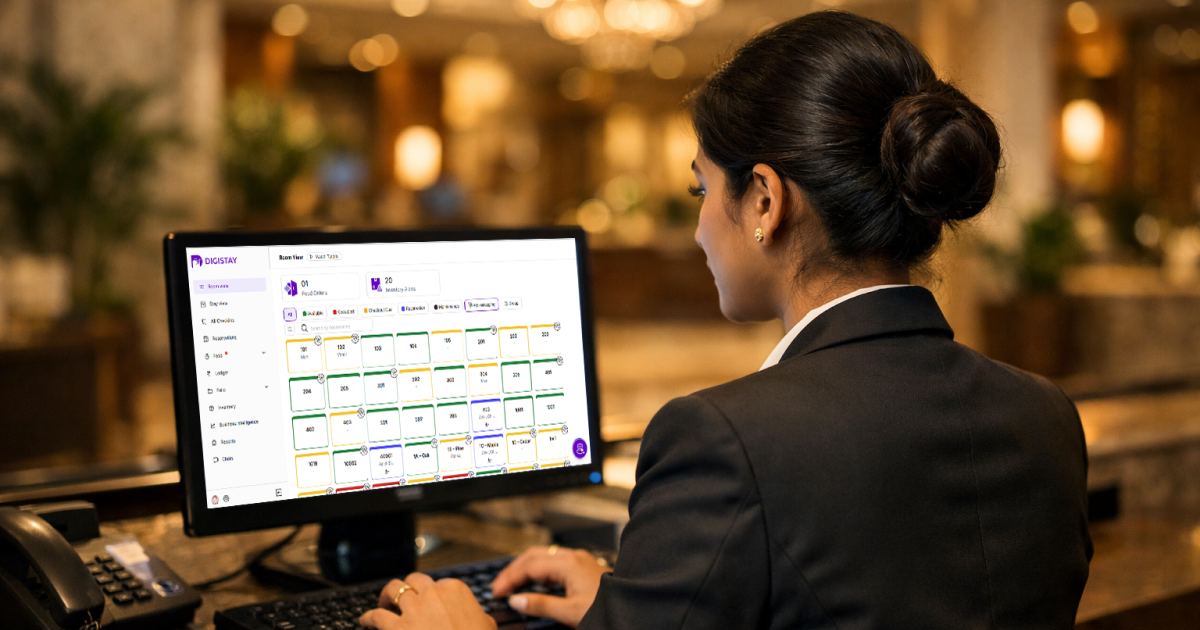
Modern hotel management software helps teams monitor bookings, analyze performance, and streamline daily operations from a single dashboard.
A centralized hotel management dashboard allows teams to monitor bookings, performance, and daily operations in real time - making it easier to evaluate software capabilities before selecting the right system.
This guide is a practical checklist to help you evaluate hotel management solutions with confidence. Use it to compare vendors, run short trials, and assess how each system handles bookings, front desk operations, integrations, and reporting.
Key Takeaways
- •Understand how a structured checklist simplifies vendor evaluation
- •Identify essential and advanced hotel PMS features
- •Learn how to test usability, integrations, and reporting
- •See how automation reduces staff workload and errors
- •Improve guest experience through digital booking and faster check-in
The Changing Landscape of Hotel Management Technology
Hotels today balance rising guest expectations with persistent staffing shortages. The right hotel management solution can reduce repetitive work, streamline workflows, and improve service consistency.
Current Challenges in Hotel Operations
Today's hotels juggle rising guest expectations and persistent staffing pressures. These two forces shape decisions about which systems to buy.
The Shift to Cloud PMS
The move from legacy systems to cloud hotel PMS platforms has become standard. Benefits include centralized data, faster updates, improved reporting, and easier multi-property management.
Post-pandemic tech expectations now include:
These are no longer optional features; they are baseline requirements.
Why Choosing the Right Hotel Management Software Matters
The right system directly affects efficiency, guest satisfaction, and profitability.
Operational Efficiency
Guest Experience
Revenue Optimization
Essential Hotel Management Software Features
Core Features
| Feature | Description | Benefit |
|---|---|---|
| Reservation Management | Real-time updates, confirmations, cancellations | Maximizes occupancy, reduces no-shows |
| Front Desk Operations | Check-in/out, room assignment, folios | Faster service, fewer errors |
| Housekeeping Management | Room status, task tracking | Faster turn times |
Advanced Features
Integration Capabilities
Red flags: closed APIs, paid basic integrations, and long connector timelines.
The 7 Questions That Will Help You Choose the Right Hotel Management Software
Now that you understand what modern hotel management software can do, it’s time to evaluate your options methodically. Instead of relying on sales demos or feature checklists alone, use the following seven questions as a decision framework. Each one targets a critical area: fit, usability, integrations, analytics, security, support, and cost, so you can compare hotel management solutions on what actually matters for your operations and growth.
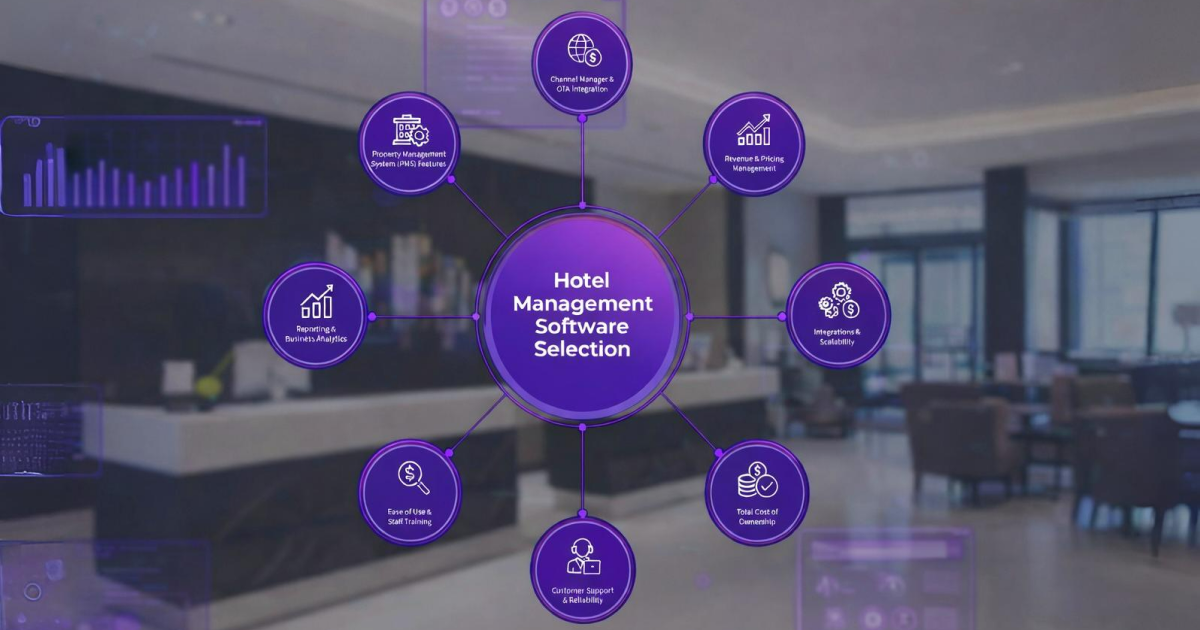
Hotel Management Software Selection – Key Factors to Consider
Choosing the right hotel management software is a strategic decision that impacts operations, revenue, and guest experience. Here are the essential factors to evaluate:
🔹 Property Management System (PMS) Features
Ensure the system covers core hotel operations like reservations, check-in/check-out, housekeeping, billing, and guest management.
🔹 Channel Manager & OTA Integration
Sync availability and pricing across all booking platforms in real time to prevent overbookings and maximize visibility.
🔹 Revenue & Pricing Management
Look for dynamic pricing tools, demand forecasting, and automated rate optimization to increase profitability.
🔹 Integrations & Scalability
Your software should integrate easily with third-party tools and scale smoothly as your property grows.
🔹 Total Cost of Ownership
Evaluate setup costs, subscription fees, maintenance, upgrades, and long-term value not just the initial price.
🔹 Customer Support & Reliability
Reliable support, quick issue resolution, and strong system uptime are critical for uninterrupted operations.
🔹 Ease of Use & Staff Training
Choose software that is intuitive and easy to learn, reducing training time and operational errors.
🔹 Reporting & Business Analytics
Access real-time insights, performance reports, and data analytics to make informed business decisions.
✅ The right software should streamline operations, increase revenue, and enhance guest satisfaction all in one integrated system.
Question 1: Does It Fit Your Hotel’s Size and Type?
Not all hotel management solutions suit every property.
Checklist:
Question 2: How User-Friendly Is the Interface?
Usability directly impacts training time, staff productivity, and guest service.
What to test:
Tip: Run a short pilot with real staff, not just management demos.
Question 3: What Integration Capabilities Are Offered?
Strong integrations reduce manual work and prevent data mismatches.
Key areas:
What to request:
Question 4: How Robust Are Reporting & Analytics?
Good analytics turn data into decisions.
Must-have metrics:
Look for:
Demo test: Ask the vendor to build a custom dashboard live.
Question 5: What Security Measures Are in Place?
Security is non-negotiable.
Expect:
Tip: Request documentation before contract signing.
Question 6: What Level of Customer Support Is Available?
Support quality affects uptime and long-term ROI.
Evaluate:
Tip: Test support responsiveness during the trial.
Question 7: What Is the Total Cost of Ownership (TCO)?
Look beyond the sticker price.
Include:
Pricing models:
ROI framework:
Conclusion
Choosing the right hotel management software is a strategic decision that shapes operations, guest experience, and long-term growth. Use this 7-question checklist to compare hotel management solutions methodically. Focus on usability, integrations, reporting, security, support, and true cost, not just feature lists.
Next steps:
This structured approach will help you select a hotel PMS that works today and scales tomorrow.

About the Author
CEO & Product Growth Strategist
Abhinav is a product growth leader specializing in strategic planning, product–market fit, and scaling high-impact teams. As CEO, he focuses on building technology-driven solutions that drive measurable growth and long-term business value.
“Growth happens where strategy, execution, and innovation meet.”
Frequently Asked Questions
Core PMS tools (reservations, front desk, and housekeeping), plus advanced features like revenue management connectors, guest communication, and analytics.
Critical. Ease of use reduces training time and errors. Always test with frontline staff.
PMS, channel managers, payment gateways, POS, and CRM tools with two-way data flow.
Real-time KPIs, customizable dashboards, scheduled exports, and forecasting support.
GDPR/CCPA support, encryption, PCI DSS handling, SOC 2/ISO 27001, and disaster recovery plans.
Clear SLAs, onboarding support, 24/7 availability, and ongoing training resources.
Include licenses, setup, integrations, training, and support. Model labor savings and revenue gains over 1–3 years.
Yes, if it supports multi-property dashboards, centralized reporting, and flexible pricing.